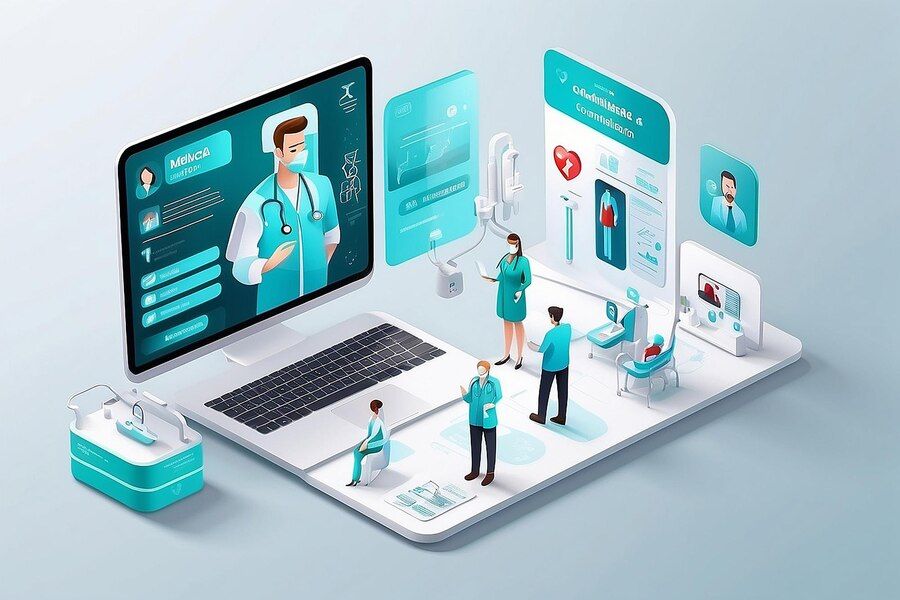
Telemedicine has become an integral part of modern healthcare, enabling patients to consult doctors, receive prescriptions, and access follow-ups from the comfort of their homes. This innovation is bridging healthcare gaps, particularly for rural or underserved populations.
Expanding Access to Care
Remote consultations allow patients to connect with specialists instantly, reducing the need for physical visits. Integrated platforms, including video calls and remote monitoring tools, ensure timely diagnosis and treatment.
Technology Driving Operational Efficiency
Modern telehealth systems incorporate electronic health records (EHR), appointment scheduling, and analytics to streamline operations. AI-powered insights help predict patient risks, optimize care plans, and improve clinical outcomes.
“Telemedicine isn’t just a convenience; it’s the foundation for accessible, efficient, and intelligent healthcare.”
Mobile and Wearable Integration
Wearables and mobile apps track vital signs in real time. Providers can access this data securely, enabling continuous monitoring, timely interventions, and improved patient engagement.
Security and Patient Privacy
Telemedicine platforms adhere to strict security protocols, including HIPAA compliance and encrypted data storage, ensuring that patient information remains private and secure.
The Future of Patient-Centric Care
By 2025, telemedicine is expected to be a standard component of healthcare. Hospitals embracing these technologies will achieve greater efficiency, improved patient outcomes, and a stronger reputation for innovation.
Telemedicine is redefining healthcare delivery — enhancing accessibility, efficiency, and the overall quality of patient care.